





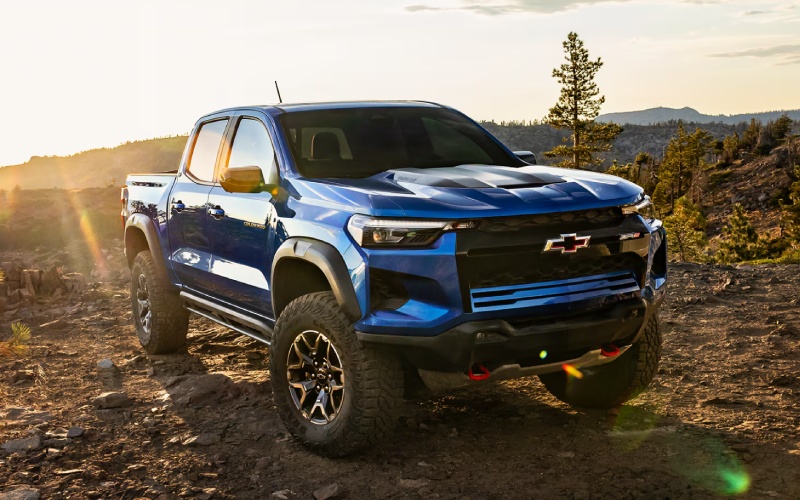
Don Johnson’s Hayward Motors Chevrolet – 2026 Chevrolet Colorado or 2026 Honda Ridgeline – Which midsize truck tows more with confidence around Bayfield, WI?
If you are shopping midsize pickups and asking which one tows more with poise around Bayfield, WI, the answer starts with what you plan to pull, how often, and where you will drive. Boat ramps along the South Shore, winding approaches to trailheads, and tight downtown streets all ask different things from a truck. On paper, one spec jumps out: the Chevrolet Colorado is rated to tow up to 7,700 pounds when properly equipped, while the Honda Ridgeline is rated up to 5,000 pounds. But numbers alone do not tell the full towing story. Power delivery, camera coverage, hitch guidance, cooling, and chassis design all determine how relaxed you feel with weight on the ball.
Let’s break down the key factors that separate these two when towing and how those differences show up in real use, from launching a fishing boat to hauling a side-by-side into the Chequamegon-Nicolet.
The quick takeaway
Colorado’s standard 2.7L TurboMax® delivers 430 lb-ft of best-in-class standard torque through an enhanced eight-speed automatic, which helps the truck get moving with a trailer on grades and pull steadily at low rpm. The Ridgeline’s 3.5L V-6 is smooth and reliable, but with 262 lb-ft of torque, it simply has less shove off the line. That difference matters most on slippery ramps, loose gravel, or when merging with short on-ramps.
Why torque delivery matters at the ramp and on the road
Low-end torque is what lifts a trailer up a ramp and helps you crawl forward with control. Turbocharged torque arrives early in the rev range, so the Colorado eases heavy loads into motion with less throttle. The Ridgeline’s naturally aspirated V-6 builds power with revs, which can require more pedal and more shifting to maintain momentum. Fewer downshifts with weight behind you usually means better composure for truck and driver alike.
Chassis, cooling, and stability
Colorado’s body-on-frame construction is purpose-built for regular towing and uneven terrain. A sturdy ladder frame resists flex under tongue weight, and the available 2-speed transfer case plus Off-Road and Terrain drive modes provide extra traction strategies at low speed. Cooling and transmission tuning are calibrated to sustain working loads, not just short trips. The Ridgeline’s unibody structure optimizes everyday ride quality and cabin isolation, and its i-VTM4® AWD system actively shifts torque for stability on wet or loose surfaces. While composed, the Ridgeline’s architecture emphasizes comfort more than repeated heavy towing.
Trailering tech and visibility
Towing confidence improves when you can see exactly what is happening around the truck. The Colorado offers up to 10 available camera views with hitch guidance and an available Trailering App with checklists and monitoring tools. Underbody camera views are available on off-road models for situational awareness on rutted approaches. The Ridgeline provides a standard rearview camera with dynamic guidelines and available Blind Spot Information System (BSI), which is helpful on multi-lane roads but does not match the Colorado’s multi-angle trailering perspectives.
Bed, tailgate, and gear management
Out back, the Colorado brings up to 17 available tie-downs, a mid-position tailgate, an available 120-volt bed outlet, and StowFlex® tailgate storage, useful for wet straps or small tools you want separated from the bed. The Ridgeline’s Dual-Action Tailgate and lockable In-Bed Trunk® are genuine advantages for secure storage and tailgate utility. If you need to store rods, ropes, or inflators under lock and key, the Ridgeline’s trunk shines. If you frequently haul varied cargo and want more tie-down options and power in the bed, the Colorado takes the edge.
Real-world towing scenarios
- Fishing boat to the marina: Colorado’s torque and camera-guided hitching make hook-up and ramp work straightforward, especially on algae-slick concrete or gravel shoulders.
- Side-by-side on a flatbed to the trail: Colorado’s higher tow ceiling and Off-Road/Terrain modes help on loose two-tracks, while Ridgeline’s AWD stays composed on maintained gravel.
- Weekend cabin supplies: Tie-down abundance and the mid-position tailgate on Colorado make mixed loads simple; Ridgeline’s in-bed trunk secures smaller valuables out of sight.
Driver-assistance suites and long-haul comfort
Both trucks support long towing days with standard driver-assistance technology. The Colorado includes Chevy Safety Assist with Forward Collision Alert, Automatic Emergency Braking, Front Pedestrian Braking, Lane Keep Assist with Lane Departure Warning, Following Distance Indicator, and IntelliBeam® auto high beams. The Ridgeline’s Honda Sensing® suite provides Collision Mitigation Braking System™ (CMBS™), Road Departure Mitigation (RDM), Adaptive Cruise Control (ACC), and Lane Keeping Assist System (LKAS). Both reduce fatigue. The difference returns to towing specifics—Colorado’s trailering cameras and app add confidence where it counts.
Frequently Asked Questions:
Can both trucks handle a midsize camper?
Depending on trailer weight and tongue load, Colorado’s 7,700-pound max rating offers more headroom for a well-equipped camper. The Ridgeline’s 5,000-pound rating covers lighter campers, but weights and balance should be verified before hitching up.
Do I need a special package to tow with the Colorado?
To reach the maximum rating, you will need the proper configuration and equipment. Your best next step is to review your trailer and cargo needs with a product specialist who can match axle ratios, cooling, and hitch hardware appropriately.
How does AWD vs 4WD matter when towing?
AWD systems like Ridgeline’s i-VTM4® optimize on-road traction and light-trail confidence automatically. Colorado’s 4WD with a 2-speed transfer case adds low-range gearing for slow, controlled movement on steeper, rougher approaches—an advantage at tricky launches or on eroded two-tracks.
How to choose the right setup for Bayfield-area driving
- List your top use cases: Prioritize boat ramps, mixed-lane towing, or off-pavement access to inform configuration choices.
- Match trailer weights carefully: Confirm loaded trailer weight and tongue load, then target the configuration that leaves a margin above those numbers.
- Test visibility tools: Try Colorado’s camera views and the Ridgeline’s rearview plus BSI on a test loop similar to your routine.
For shoppers who tow most weekends or who want maximum capability in reserve for future gear, the Colorado’s torque-rich TurboMax® engine, higher tow ceiling, and towing-focused tech provide an easy answer. For owners with lighter trailers who value secure in-bed storage and a very smooth ride, the Ridgeline remains appealing.
If you want help choosing the smartest configuration for the South Shore and Northwoods, our team at Don Johnson’s Hayward Motors Chevrolet is ready to assist—serving Ashland, Superior, and Bayfield with product knowledge grounded in local roads, ramps, and trails. Bring your questions, your hitch measurements, and a rough weight estimate, and let’s tailor a truck that tows with calm control on every trip.
Request more 2026 Chevrolet Colorado information
Connect with us


Archives
- 2023 GMC Dealer in Hayward
- Chevrolet Colorado
- Chevrolet Dealer
- Chevrolet Equinox
- Chevrolet Service
- Chevrolet Silverado 1500
- Chevrolet Silverado 2500 HD
- Chevrolet Trailblazer
- Chevrolet Traverse
- Chevrolet Trax
- Don Johnson's Hayward Motors Service
- Hayward Chevrolet Dealer
- Hayward GMC Dealer
- Uncategorized